



Please consider subscribing to Memoir(ish), free subscribers gain access to all new posts and the full archive. If you'd like to support the work, a paid subscription is always welcome. It makes a real difference and helps me to continue this.
Nebaj (ney-BACH)
One early morning years ago, leaving a remote village in the mountains of Guatemala, a single moment imprinted itself on my brain like the microscopic grooves etched into a vinyl record.
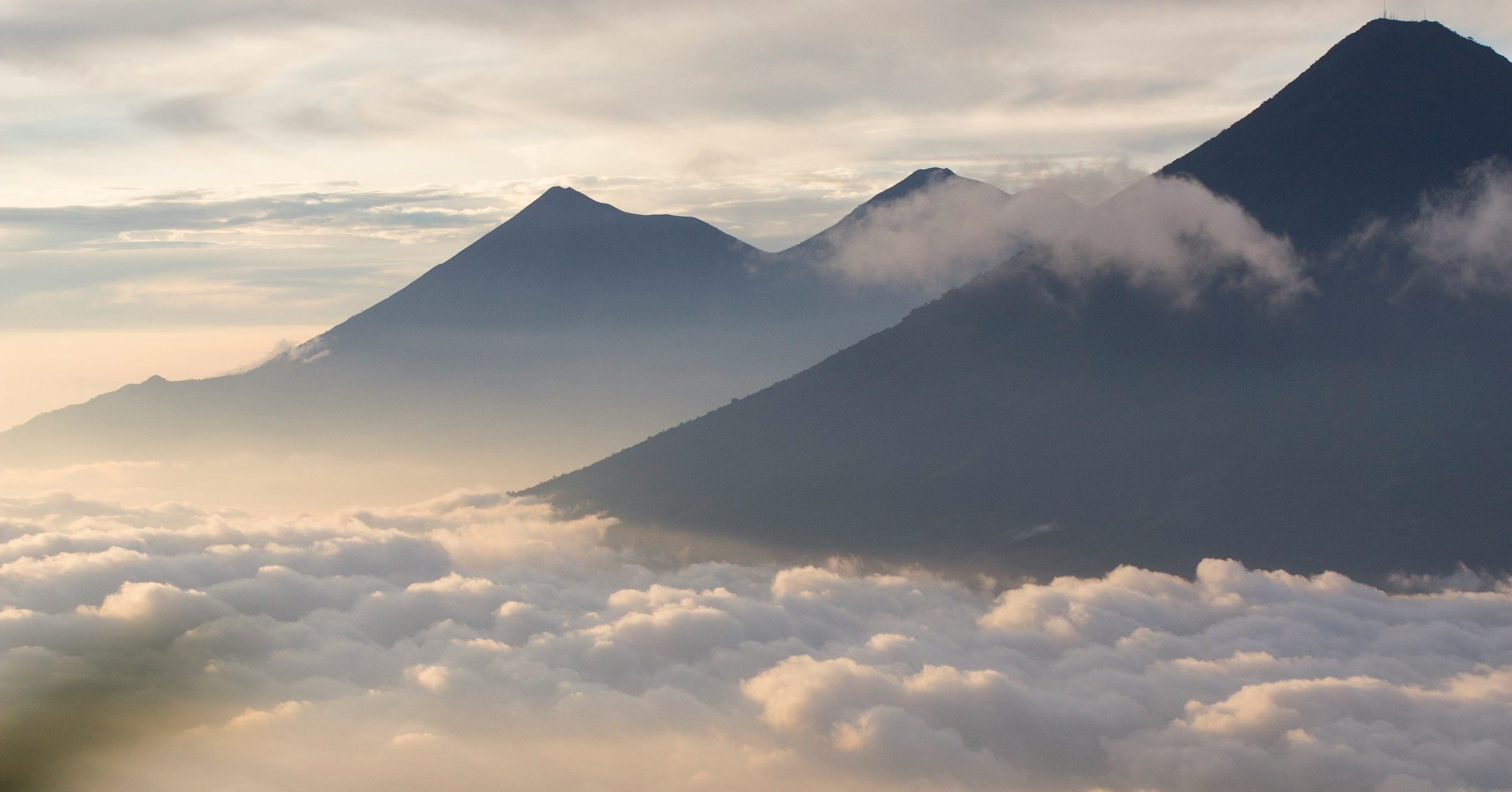
The sun had recently begun to rise, rays of light peeking above the short but steep mountains that circle like a pointed crown around the small village of Nebaj. Our early morning departure was needed to return to our home in Guatemala City. From this part of the country, a long drive was ahead of us from the western highlands returning south and slightly east to the bustling city. We had hours to go through the mountainous dirt road before we would hit the pavement that would take us winding through the countryside.
I was in the passenger seat with my father driving, my mother behind me. At 22 years old, I preferred to spend the morning in bed and the sleep I craved caked around my still squinting eyes. I was physically and emotionally tired, an already too familiar feeling that would stay with me for years to come. I had been in Guatemala for a little over a month, still learning the language but getting better at following conversations, although very much dependent on those around me to do most of the talking. I was an unmoored ship that needed my parents’ help to speak to the locals while my friends either had or were about to graduate college, start their careers, some even engaged to marry and beginning to plan very adult lives. I was living with my parents in a foreign country. Where my peers had embarked upon definable life paths, I felt my life was coming off the rails. I was then a college dropout, drifting with an uncertain future and I hated myself. If there is a stronger word than hate, then I felt that, too. At a time when all I wanted was to have an element of self truth, I was hiding an already well-versed suppression because the truth went against everything I was raised to believe. I wanted to think I was on a journey of self-discovery headed for a light bulb realization, but I wasn’t yet ready to acknowledge that truth.
We had just left the open square-shaped Spanish Colonial home near the center of town where we slept as guests the night before. In the near middle of nowhere, we began tracing our route through veiny streets, past the town square. Maybe this is a figment of false memory, but I remember being told at the time the square was under construction to add an underground parking garage. I can imagine the people who made decisions for the village were expecting an influx of outside interest, so wanted to anticipate and accommodate a horde of cars to ensure no visiting tourist money would be turned away. Possibly, they were building it first and hoped the tourists would come soon after, after being written up in a trendy guidebook. It would have been a financial sacrifice and last ditch effort to appease the ancient gods and keep alive one of the last places descendants of the Mayans still called home.
In either scenario, it was clear money was being spent on a cause that was long in coming, if at all. The hope of redemption for a community whose remote and picturesque location had been plagued by hundreds of years of pain. First brought centuries ago by European disease, a deadly and silent result of the Spanish colonizers who once streamed in on their own quest for the riches of land and gold. Then, and most recently, by the civil war with seemingly unending cycles of death from rebels and the former militaristic government. Men and boys of appropriate-enough age were forced to join the revolutionary forces to fight the government or face death. On the arrival of the military seeking out these rebel forces, men and boys of appropriate-enough age were killed upon suspicion of being the elusive guerrillas. And the cycle continued for thirty-six long years, from 1960 until 1996.
Memoir(ish) is a reader-supported publication. Free subscribers gain access to everything but paid subscribers also receive my undying love. Either way, you’re in.
I can appreciate the pride the locals must feel in their home, the setting is truly moving and there is no justice in simply using words to describe it. If you can make the long trek, you will be welcomed. This much is certain.
However, in order to descend upon Nebaj, one must traverse through and down a dense mountain range, lush and steep. Approaching the town, I marveled at the expert farmers who passed down from generation to generation the best way to milk the land following thousands of years of ancestral use. In life, one must take the lot one has been given, and for many of these farmers that meant tilling land at nearly impossible angles. As if it were me hanging there, I was terrified for the men I witnessed dangling from long ropes, one end tied around their waists and the other around a heavy stake in the ground. This suspended dance of fostering and harvesting crops was carefully performed on perfectly parallel rows. In the unforgiving sun, men tended to their families’ livelihood with the constant reminder of what an unsure step or carelessly attached rope could bring. Once you descend through the spectacle of these dancing farmers, you come upon a town built of stone in the style of the Spanish who colonized it.
The morning was crisp and slightly wet-fallen. Dewy grass sent up graceful evaporating smoke through the broken rays of fragmented light. The heavy air was full of glowing lines as if left by a 3-D highlighter, just beginning to follow the peak down from the rising sun on the other side of the low mountains to greet the start of the day. The magnificent sight of a town that burned in splendor each morning. Hovering large and bright, it seemed certain the sun lived just on the other side of the nearest mountain. Maybe we could reach this pot of gold if we hurried fast enough.
As we crept to the edge of town in our second-hand four-wheel-drive SUV, we were slow going to the arched black iron gate that proudly declared the town limits, my father careful to avoid the gradual increase in foot traffic. I sleepily began to notice more and more indigenous Mayans, in this region they are Quiché, on their march toward the town center. We were leaving on a market day when men, women, and children who lived in the sparsely populated mountains were trekking their familiar path to buy and sell. Men dragged carts, some empty and some overflowing. Women, who carried baskets perched atop graceful crowns, were draped in amazingly bright and beautiful colors that were intricately woven together in the style of their tribe.
It wasn’t uncommon for this delicate pace to be accompanied by an infant on a hip or, if the mother was lucky enough for the lightened load with a child old enough to walk, a trail of tiny joyful steps made by plump little legs behind the guiding light of the traditional Mayan skirt two steps ahead. These handmade garments were created out of tradition from a pattern developed over an untold number of years. To see these intricate designs is to see the visual representation of a cultural history older than Western Civilization as we know it. Colors mirroring the vibrant flowers that grow plentifully in the area, they were brilliant as ever.
The air was still cold but by now the grass-covered ground seemed to be boiling as the sun burned off the water droplets with more fervor. Even under the wet blanket of night, the dew isn’t able to penetrate the white ash-like dirt of these mountain roads. Perpetually dry, the floating dust clouded every molecule here. Nearly every road in the town was unpaved. The few cars, more commonly the livestock that roamed here, and anyone simply taking in the air with a walk around town or rushing around daily life, meant a certain and immediate plume of hanging dust clouds would be left in their wakes.
As we passed under the gate on our way home, the moment came as I struggled to hide my emotion from view. The air seemed more agitated than just a few minutes before, and I imagined there to be an unseen car that had cleared the way before us as we were surrounded by hanging earth in the air. In a split second, we moved from one side of the gate to the other into nearly zero visibility where the road quickly disappeared before us as we began the ascent that would take us out of Nebaj and back into the mountains. The road bent and we suddenly were eye to eye with the rays of the morning sun. A steady stream of backlit Quiché appeared on the side of the road, coming into view from nowhere on their advance to the village market. They paraded a worn path from who knows how far away to arrive here on time with the rising sun, a triumphant walk through a difficult and winding course carrying what they could to sell, barter, or trade. Soon enough, they would reverse and return home at the end of the day only to repeat this journey again and again and again.
The beauty of this sight seared into my eyes, bearing a brief witness to a version of life I would never know or lead. These figures slowly emerging from clouds of nothing, blessed by the sun behind them, appeared to me as if angels. I wondered what their home looked like? Did they have running water? Indoor plumbing? What would their struggle to put food on the table feel like day in and day out? I considered, as I have at many points in life, what community must mean to them. How, even in the harshest conditions, life trudges on and babies are born. Mothers love their children. Smiles are traded and laughs are shared. Our lives and backgrounds couldn’t be more different, and yet how different could they be? As my throat became tight, I swallowed hard and fought to keep the tears down. What right did I have to complain about absolutely anything?
I can’t explain the transcendence I felt then but can only feel gratitude for a slice of time I will never forget. For a fleeting speck, we were all hanging onto this huge rock hurtling through space together.
The regularity of ritual for these people is not unlike the one I was raised in: we are all growing up, growing together, sometimes growing apart, and doing the best we can for those we love. There I found a mirror that showed me a reflection of polar opposites staring into each other.
I wondered what they saw when they looked at us. Today, none of those people would have any reason to remember seeing us on that road. But I still carry them with me.
Memoir(ish) is free, which means the best thing you can do is share it with someone who might actually read it. If you want to go further, a paid subscription keeps the lights on. Either way, thank you for being here.


